
Understanding Communication Strategies for Remote and Off-Grid Travel
Navigating remote and off-grid environments presents unique challenges, particularly concerning reliable communication. When venturing beyond the reach of conventional cellular networks, establishing and maintaining contact becomes a critical aspect of travel planning, directly impacting safety, logistical coordination, and emergency preparedness. Effective communication in these isolated settings relies on a blend of specialized technologies, careful planning, and a comprehensive understanding of each method's capabilities and limitations. This article delves into the various tools and approaches available, explaining their underlying principles and providing context for their appropriate application in diverse remote travel scenarios, from wilderness expeditions to culturally immersive journeys in sparsely populated regions.
The Imperative of Remote Communication
Communication serves multiple vital functions in remote travel. Foremost among these is safety, enabling travelers to signal for help in emergencies, report medical incidents, or update support teams on their status. Beyond emergencies, communication facilitates logistical coordination, such as confirming rendezvous points, updating itinerary changes, or receiving critical weather forecasts. For solo travelers or small groups, the ability to communicate provides a crucial link to the outside world, offering peace of mind and enabling ongoing connection with loved ones or professional contacts, even when disconnected from mainstream infrastructure.
Satellite Communication Devices
Satellite communication devices operate by sending and receiving signals via orbiting satellites, bypassing terrestrial networks. These devices are generally categorized into satellite phones and satellite messengers, each offering distinct capabilities.
Satellite Phones
Satellite phones provide voice and data communication (though data speeds are typically low) across vast geographic areas, often including regions without cellular coverage. They connect directly to satellite networks such as Iridium, Inmarsat, or Globalstar. Iridium's network utilizes a constellation of low-Earth orbit (LEO) satellites, offering near-global coverage, including the poles. Inmarsat employs geostationary satellites, providing reliable service over landmasses and oceans within its coverage zones, though it may have limitations at extreme latitudes. Globalstar also uses a LEO constellation but typically requires a clear line of sight to a satellite, which can affect connectivity in mountainous or heavily forested areas.
Key considerations for satellite phones include the initial device cost, per-minute call charges, and the availability of prepaid or postpaid plans. Battery life, ruggedness, and resistance to environmental factors are also important. The devices require an unobstructed view of the sky to establish a connection, which can be challenging in dense canopy or deep canyons.
Satellite Messengers
Satellite messengers are compact devices designed primarily for two-way text messaging, GPS tracking, and SOS signaling. Examples include devices from brands like SPOT and Garmin inReach. These devices leverage satellite networks (often Globalstar for SPOT, and Iridium for Garmin inReach) to transmit short messages and location data.
Their primary advantages lie in their smaller size, lighter weight, and often lower operating costs compared to satellite phones. The SOS function, which connects directly to international emergency response coordination centers (like GEOS for Garmin inReach), is a significant safety feature. Messengers transmit location data at regular intervals, allowing friends, family, or support teams to track progress online. While some models offer limited email functionality or integration with smartphone apps for easier typing, voice communication is not typically available through these devices.
Emergency Beacons
Emergency beacons are dedicated safety devices designed to transmit a distress signal in life-threatening situations. They do not offer two-way communication but are critical for initiating search and rescue operations.
Personal Locator Beacons (PLBs)
PLBs are small, battery-powered devices carried by individuals. When activated, they transmit a unique identification code and location information via the Cospas-Sarsat satellite system to a network of ground stations, which then alert national search and rescue authorities. PLBs are typically registered to an individual, and this registration links the beacon to emergency contact information and details about the person. They are intended for extreme emergencies only and have a long battery life for sustained transmission once activated.
Emergency Position-Indicating Radiobeacons (EPIRBs)
EPIRBs serve a similar function to PLBs but are primarily used on boats and aircraft. They are generally larger and more robust, often designed to float and activate automatically upon immersion in water. Like PLBs, EPIRBs use the Cospas-Sarsat system to transmit distress signals to maritime or aviation rescue coordination centers.
Terrestrial Radio Communication
While cellular networks are limited, other forms of terrestrial radio communication can be effective in certain remote travel contexts, particularly for group coordination or specialized applications.
Two-Way Radios (Walkie-Talkies)
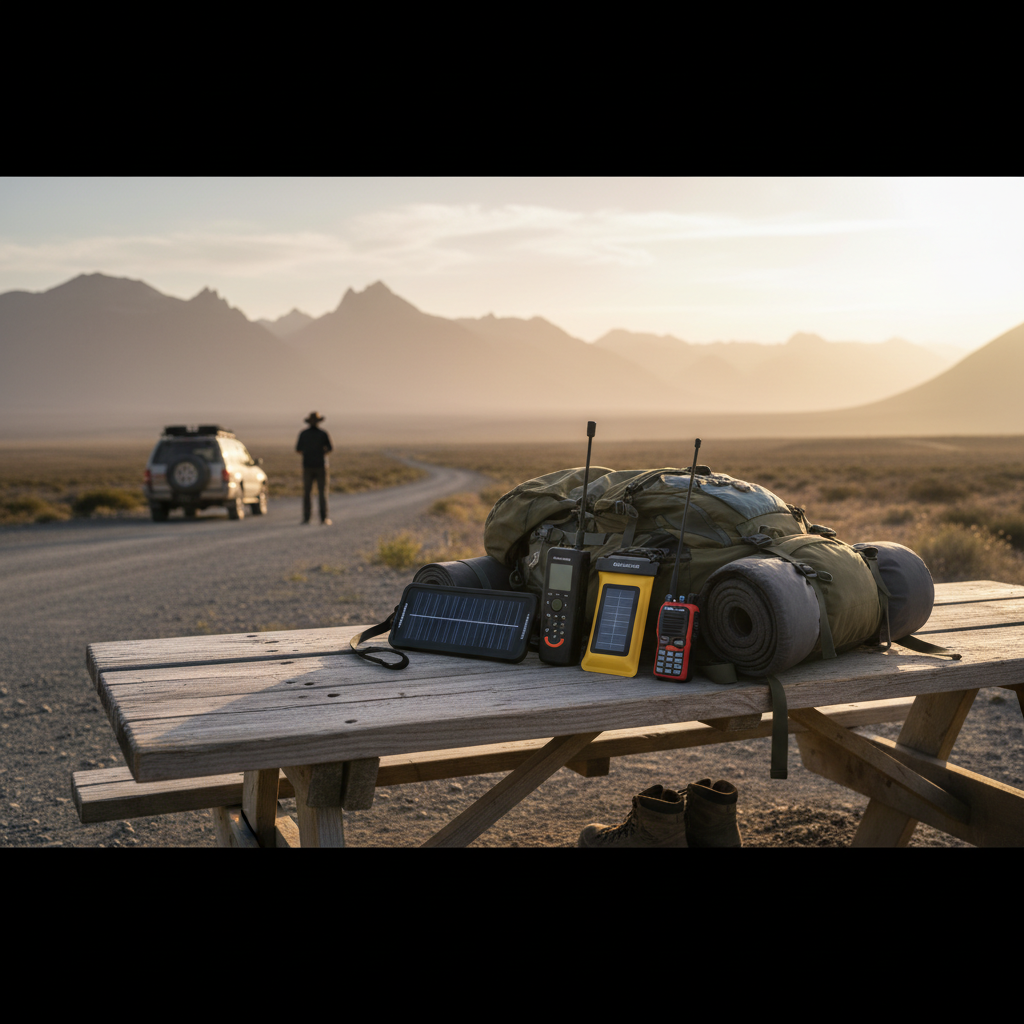
Consumer-grade two-way radios, often operating on FRS (Family Radio Service) or GMRS (General Mobile Radio Service) frequencies, provide short-range line-of-sight communication. They are useful for maintaining contact within a group over distances of a few kilometers, especially in areas where cellular service is unavailable. More powerful professional models (e.g., business band radios) exist but often require licensing and specialized equipment. Terrain, obstacles, and atmospheric conditions significantly affect their effective range.
Satellite Internet Devices
Emerging technologies, such as portable satellite internet devices (e.g., Starlink Roam/Mobile), offer high-speed internet connectivity in remote areas. These systems utilize large constellations of LEO satellites to provide broadband access, enabling standard voice calls over internet protocols (VoIP), video conferencing, and extensive data transfer. While offering unparalleled connectivity, these devices are typically larger, consume more power, and have a higher operational cost than traditional satellite phones or messengers. They are more suited for semi-permanent remote camps or vehicles rather than lightweight backpacking.
Pre-Arranged Check-In Procedures and Local Contacts
Beyond technological solutions, non-electronic communication strategies play a crucial role. Establishing a detailed check-in plan with a reliable contact person at home is fundamental. This plan typically outlines specific dates and times for expected contact, a maximum period of no contact before initiating an alert, and a designated emergency protocol. The contact person is responsible for raising an alarm if the traveler fails to check in as scheduled.
Moreover, identifying and establishing contact with local authorities, guides, or community members in the destination prior to arrival can provide an invaluable layer of support. These local contacts often possess unique knowledge of the area, including potential communication points, emergency resources, and cultural protocols for assistance.
Considerations for Effective Remote Communication Planning
Effective remote communication planning involves several key factors.
Destination Assessment
Understanding the specific communication infrastructure (or lack thereof) at the destination is paramount. Researching local cellular network coverage maps, terrain features that might block satellite signals, and the availability of public communication points is essential. Some regions may have specific regulations regarding the use of satellite devices or radio frequencies.
Power Management
Most satellite communication devices are battery-dependent. Planning for extended power sources, such as portable solar chargers, power banks, or spare batteries, is critical for prolonged trips. Energy consumption varies significantly between devices and usage patterns.
Device Familiarity and Training
Travelers should be thoroughly familiar with the operation of their chosen communication devices before departing. This includes understanding how to send messages, activate SOS functions, check battery status, and troubleshoot common issues. Practical training ensures that devices can be used effectively under stress or in adverse conditions.
Emergency Protocols and Contact Information
Developing a clear emergency protocol that outlines steps to take in various scenarios is important. This includes having a list of emergency contacts, local rescue numbers, and specific instructions for activating distress signals. Sharing this protocol with travel companions and designated home contacts ensures a coordinated response if an emergency arises.
Consulting with local authorities or experienced guides regarding specific communication requirements and safety protocols is advisable for remote travel destinations.
Conclusion
Communication in remote and off-grid travel is a multifaceted challenge that requires careful foresight and the appropriate selection of tools. From robust satellite phones and compact satellite messengers to emergency-only beacons and traditional radio systems, a range of technologies exists to bridge the gap between isolated environments and global connectivity. By understanding the principles behind these devices, meticulous planning for power and usage, and establishing clear emergency procedures, travelers can significantly enhance their safety and logistical capabilities while exploring the world's most remote locations. The choice of communication strategy ultimately depends on the specific nature of the journey, the level of remoteness, and individual safety priorities.
More from travel

Mastering Efficient Local Transportation for Immersive Urban Exploration
Discover how to navigate cities like a local, utilizing various public and personal transport options to enhance your urban exploration. This guide provides practical strategies for efficient movement, allowing for deeper engagement with city life and culture.

Essential Strategies for Protecting Travel Documents and Digital Information Abroad
International travel offers enriching experiences, but it also demands vigilance in protecting your vital documents and digital identity. Proactive preparation and secure practices are key to a smooth and worry-free journey, preventing potential disruptions and stress.

Understanding International Travel Visa Requirements and Border Procedures
International travel often necessitates a thorough understanding of visa requirements and border control protocols. These regulations vary significantly by destination, traveler nationality, and purpose of visit, influencing the planning and execution of global journeys.

Integrating Wellness Practices into Diverse Travel Itineraries for Enhanced Journeys
The integration of wellness practices into travel itineraries represents an approach that prioritizes holistic well-being throughout a journey. This method focuses on maintaining physical, mental, and emotional health while exploring new environments and cultures, extending beyond dedicated retreats.